

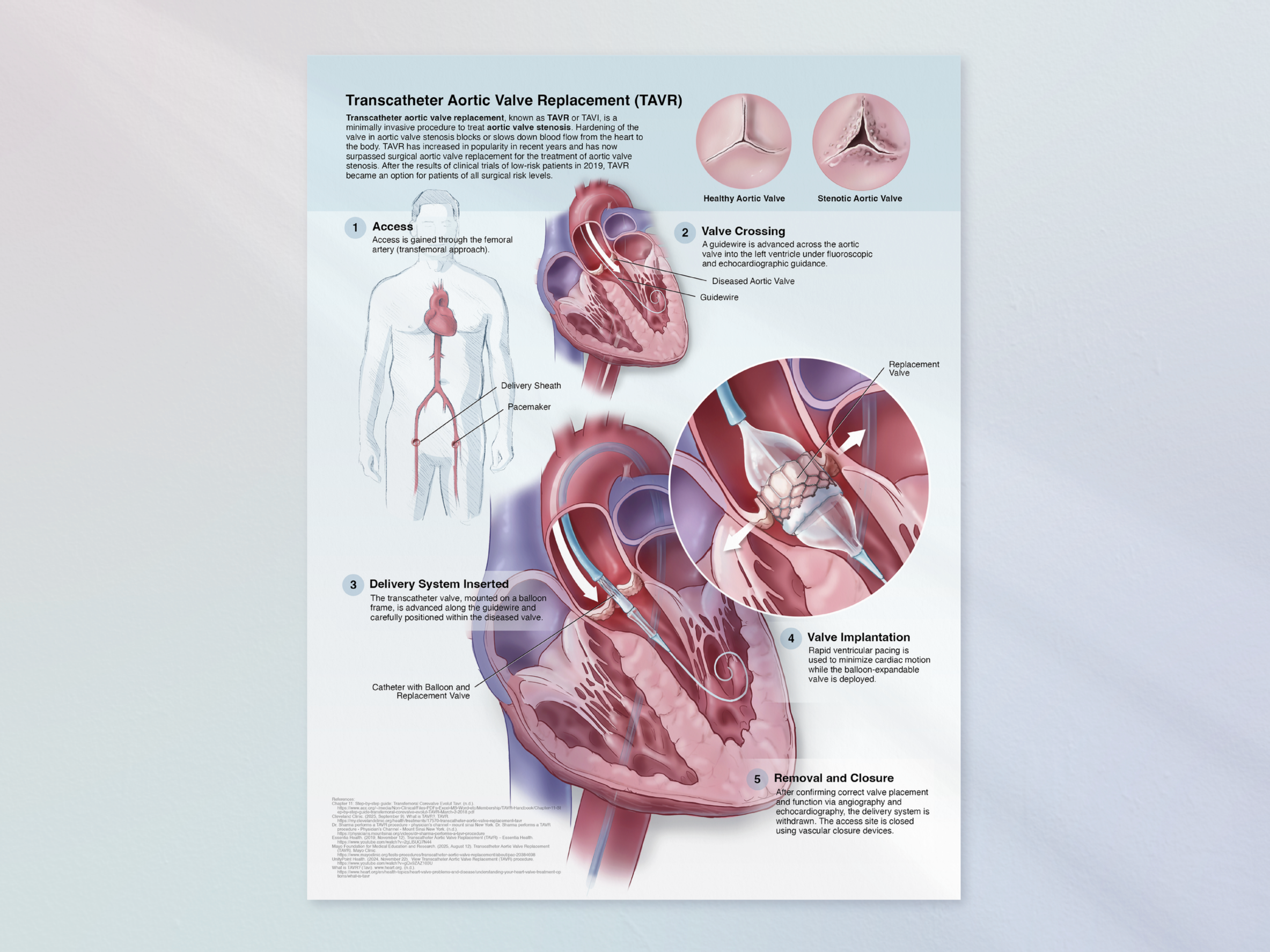
Transcatheter Aortic Valve Replacement

Transcatheter Aortic Valve Replacement (TAVR)
Media: Adobe Photoshop and Illustrator
Audience: Medical Professionals
This illustration depicts the steps involved in a transcatheter aortic valve replacement procedure, or TAVR. This piece is intended to depict the main steps of the procedure and provide background about TAVR and it’s rise in use. The piece is intended for academic journal publication for professionals in the medical field, who may not be cardiologists. Therefore, the illustration focuses more on the overall purpose and process of this procedure than specific technical techniques. This piece is intended for web use, primarily to accompany the journal article, but can also stand alone, conveying all necessary information in one concise page.
1. Research
The most important part of any accurate medical illustration is research. For a surgical illustration, live surgeries or videos of live surgeries help to develop initial sketches. Healthcare websites, research papers, and surgical guidelines/standards are useful for more specific information and context.
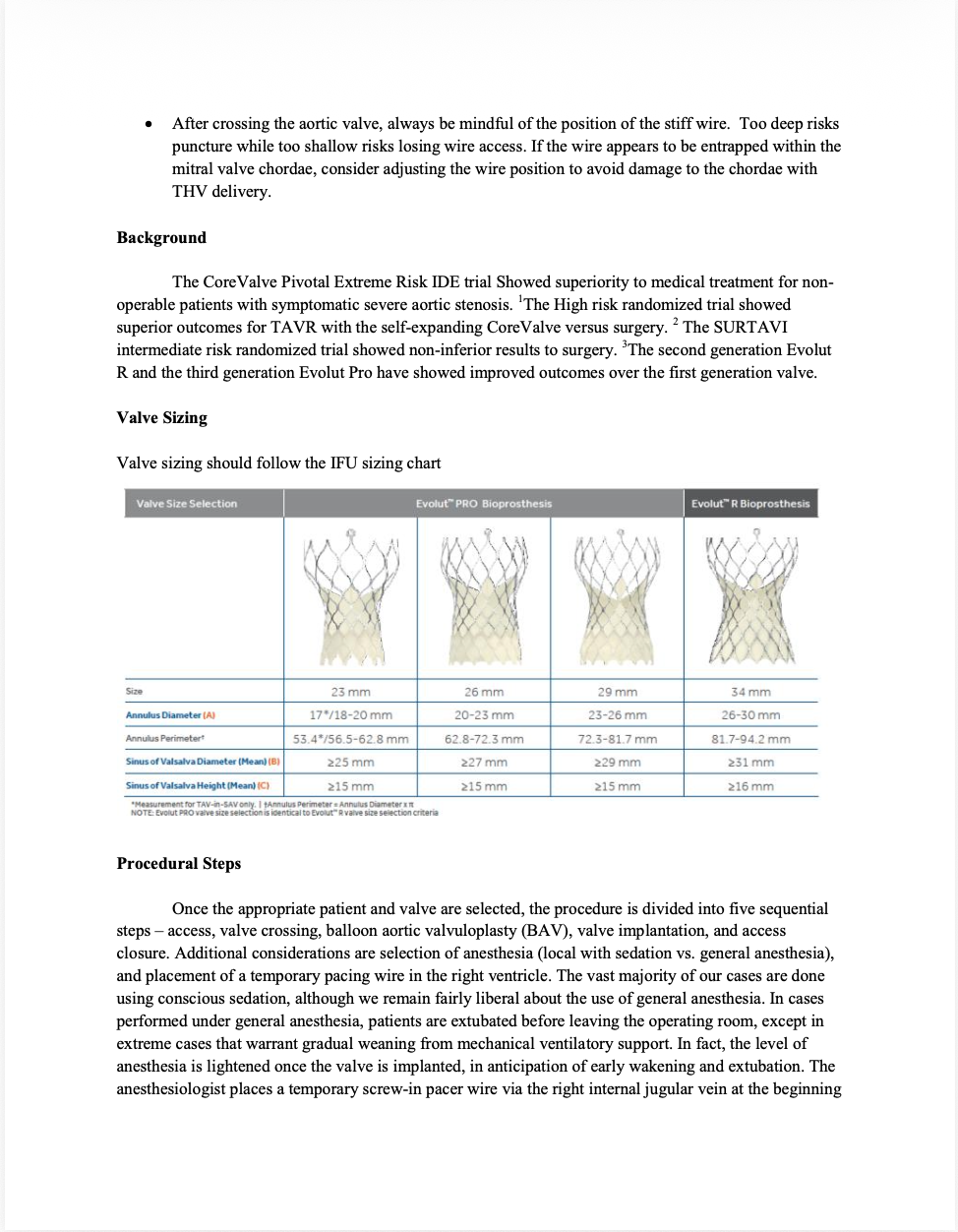
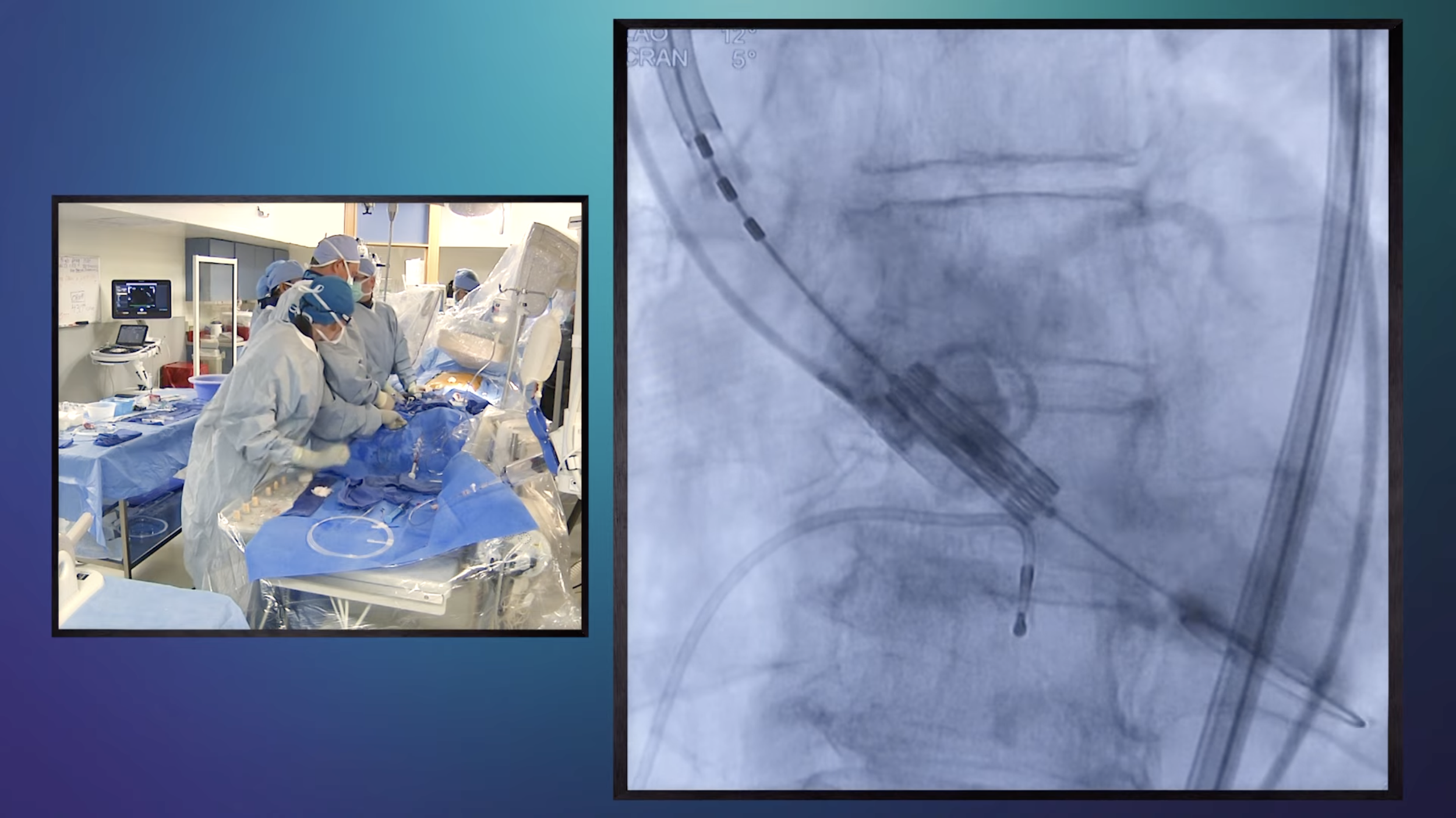
Transcatheter Aortic Valve Replacement (TAVR) - Essentia Health
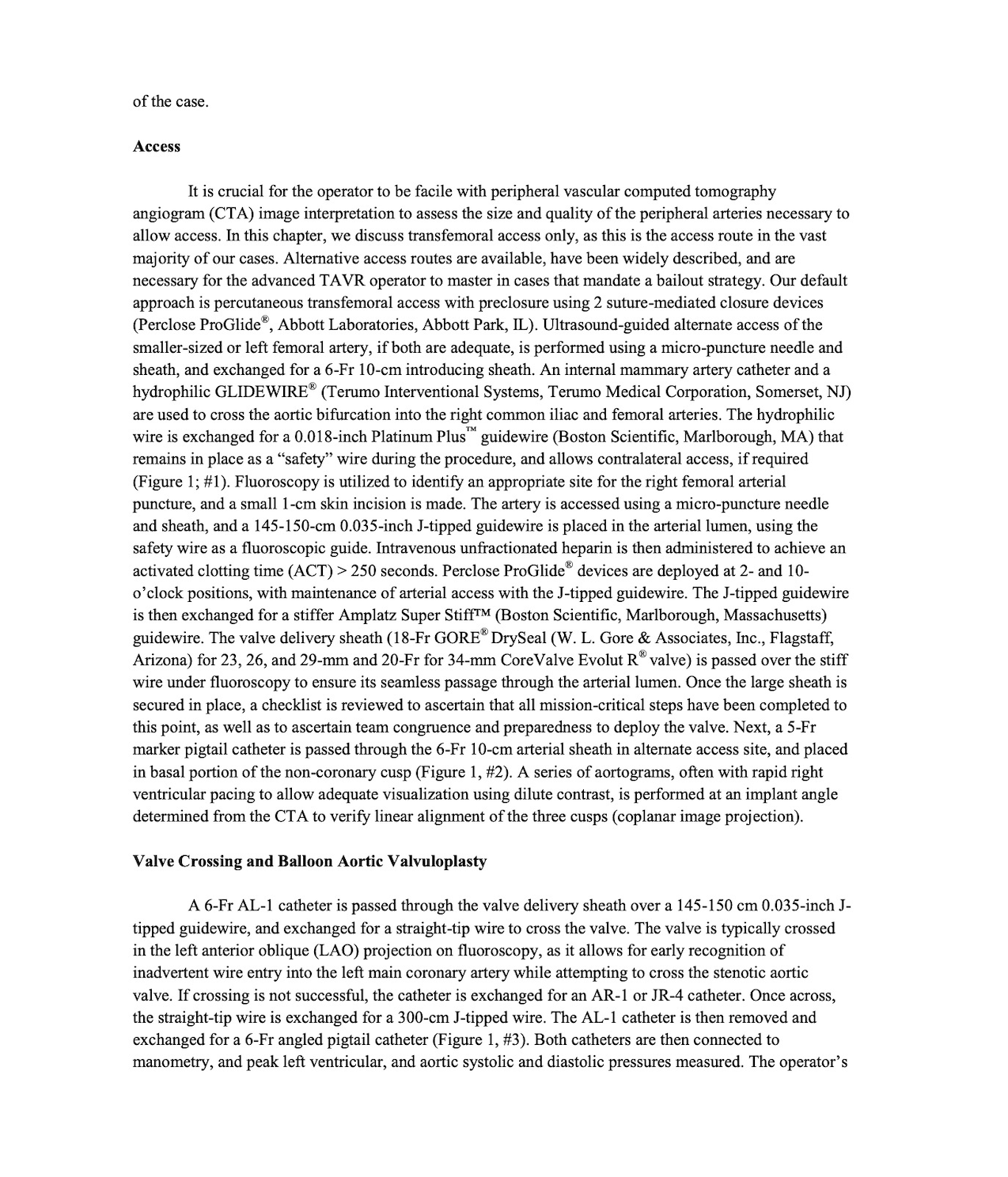
Step-by-step guide: transfemoral Corevalve Evolut TAVR, American College of Cardiology
2. Thumbnail Sketches
Thumbnail sketches are fast ways to organize visual ideas. Experimenting with layout, hierarchy, and content at this stage can save a lot of time later on when it’s time to start rendering.
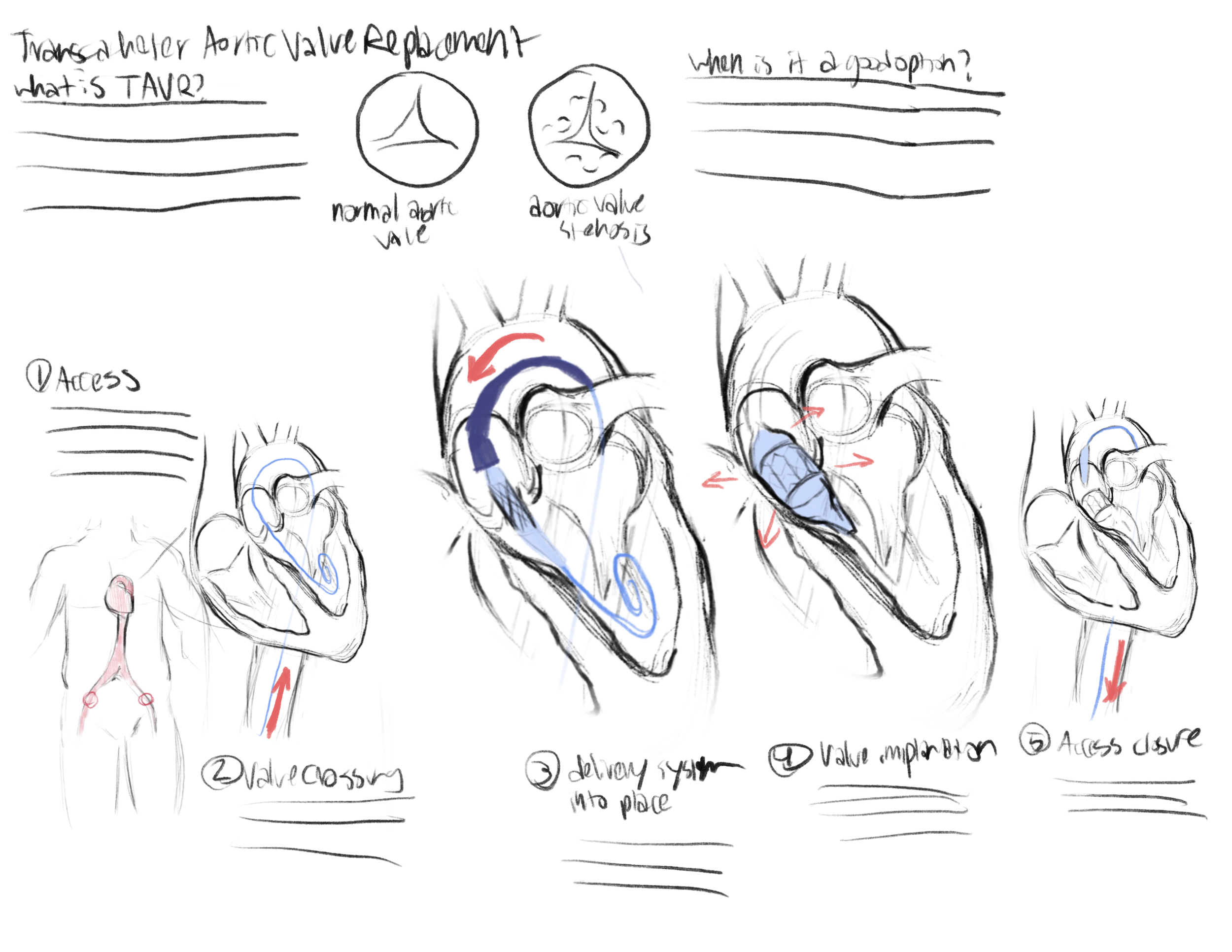
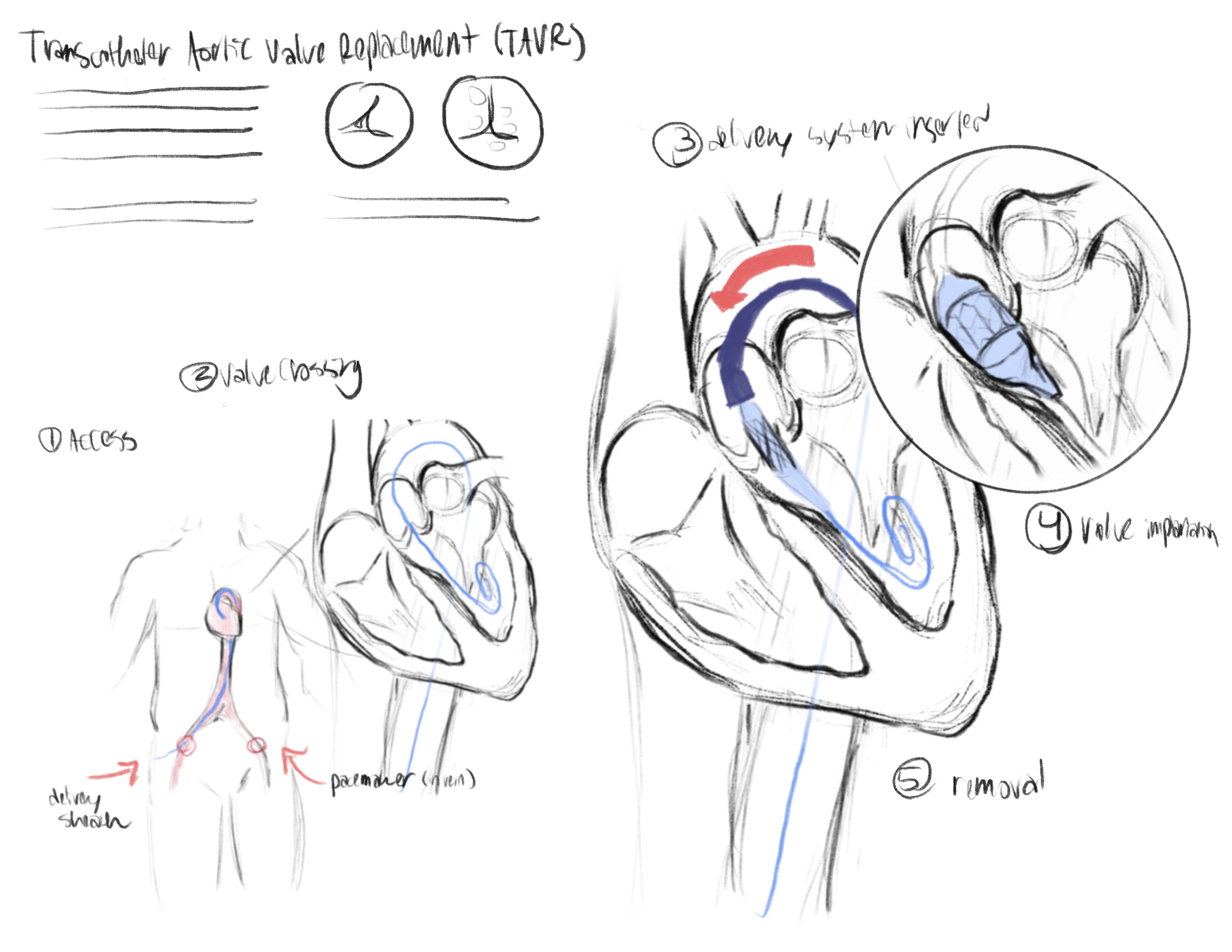
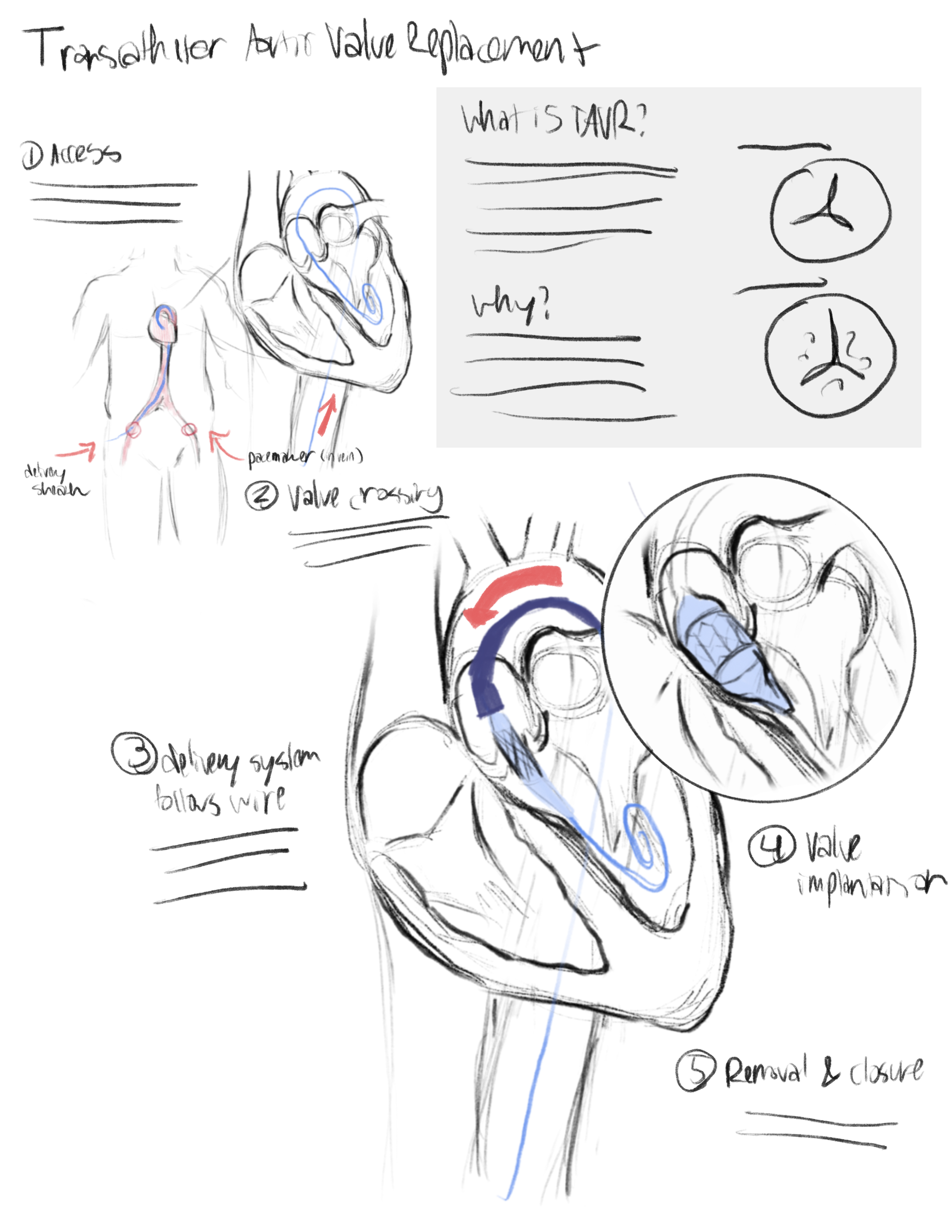
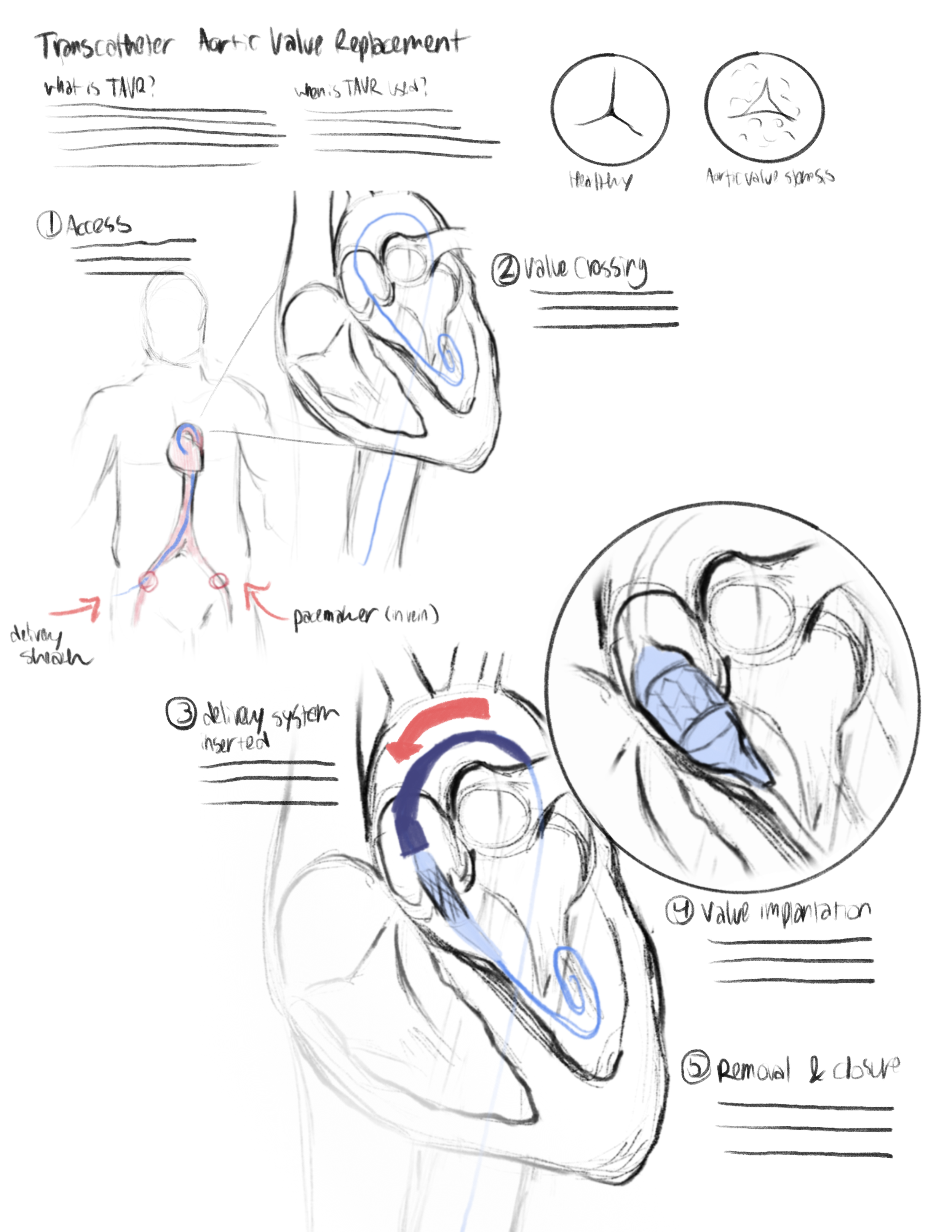
3. Refined Sketches and Color Compositions
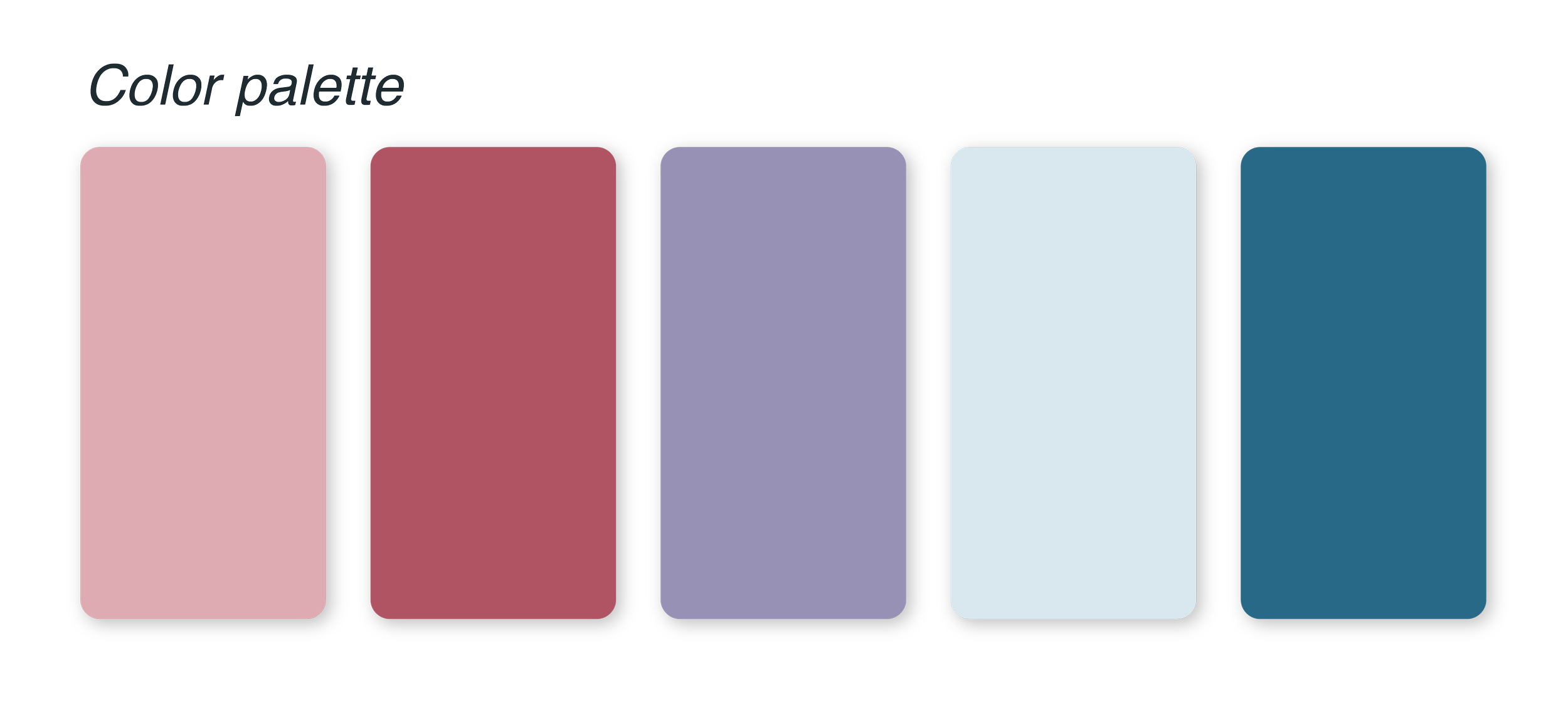
After the layout is chosen, sketches can be entered into Adobe Illustrator/InDesign and text, labels, and other visual elements can be added. Colors are added to the sketches to see what provides the clearest story and what fits the audience the best.
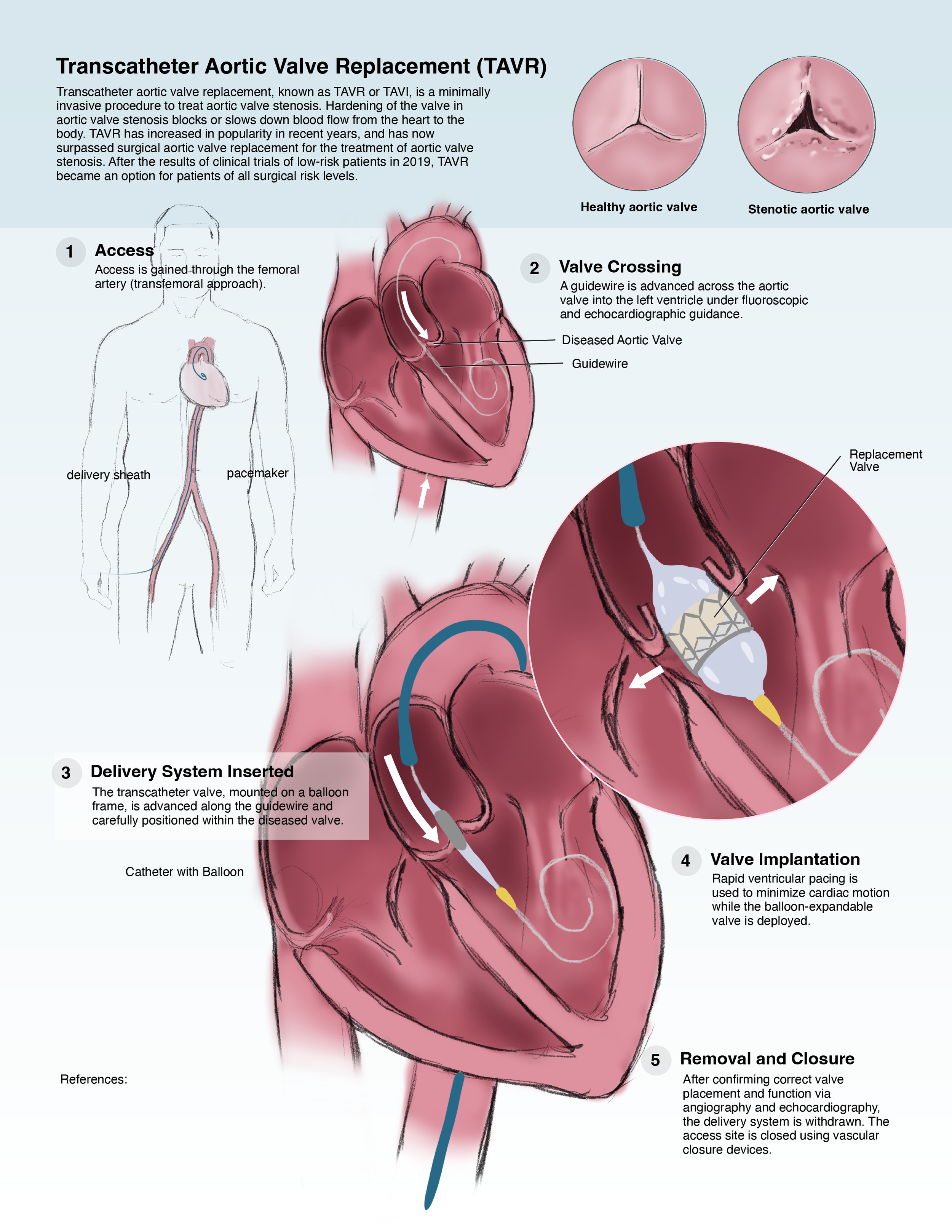
Refined sketch and color study
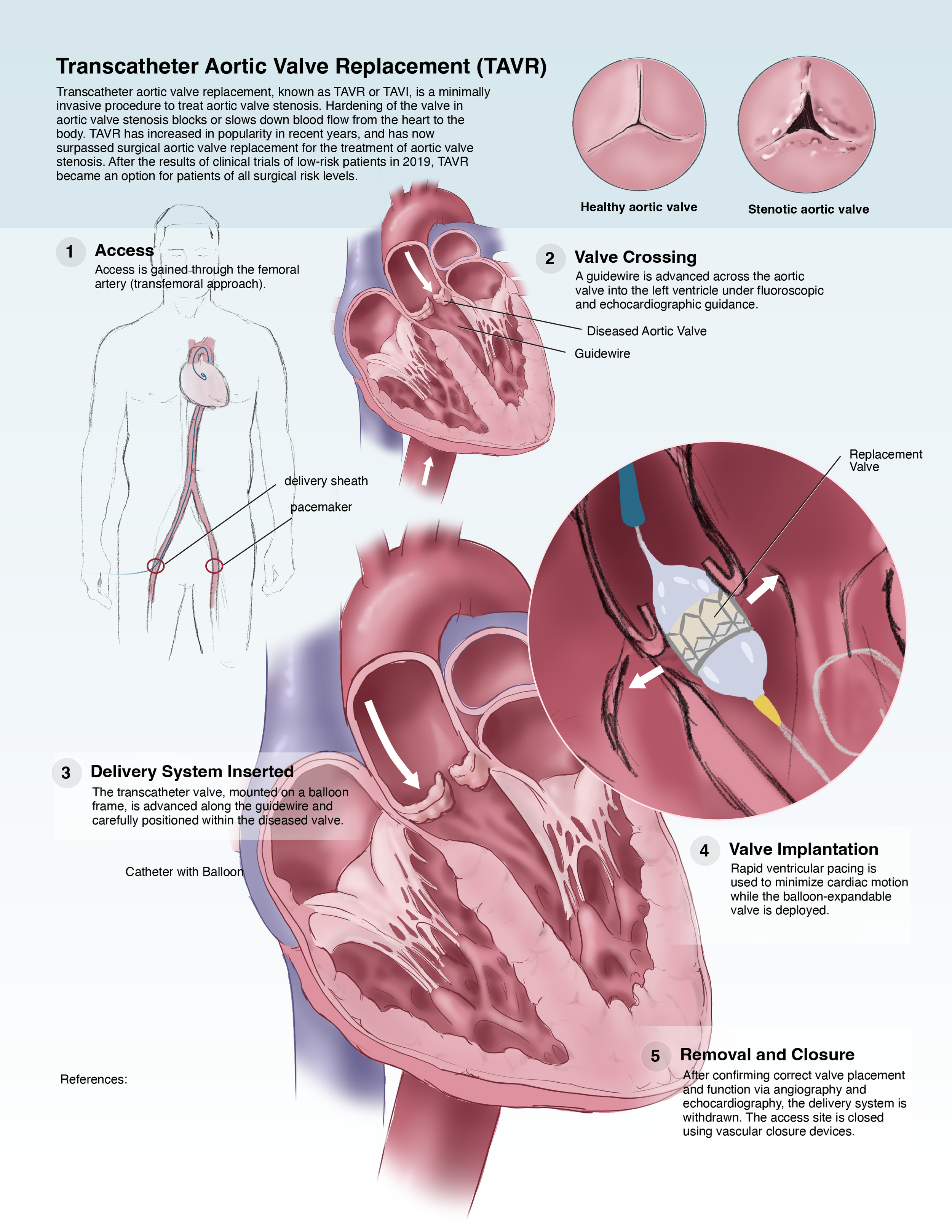
Partially rendered
4. Finalize Illustration and Layout
The rendering is is completed using photoshop and final edits to the graphic design, labeling, and color palette are made.